
I’ve noticed in the forums that the main points of view that consumers have about the 36mm Explorer are as follows:
- 1, some consumers believe that 36 mm is a very desirable size, especially for people with thin wrists, including women and some men who pursue vintage and understated styles and prefer smaller watches. For example, some people mentioned that this size is super light, comfortable and inconspicuous, which makes it perfect for everyday wear, such as those who have a 7.25-inch wrist and still choose the 36mm explorer, thinking that it can be worn with almost anything; @Podcastage even complimented that the 36mm explorer 1 is the perfect watch; and there were also some consumers who, after trying on the watch themselves, felt that the 36mm looked perfect on their wrists, and that it felt retro and discreet to wear. It was perfect on their own wrists and felt vintage and understated, such that they preferred the 36mm model after trying it on a 17cm / 6.75” wrist.
- 2, some consumers appreciated the simple elegance and classic timeless look of the 36mm Explorer, an all-around watch that is suitable for everything from adventure to formal occasions. For example, some thought that if they could have a watch that they would wear for life, the Explorer would be the perfect choice; others mentioned that it is the most versatile piece in the Rolex lineup, with a bezel design that is also very advantageous. Others feel that its new design elements, such as the new lacquered dial, movement upgrades, and other changes are good improvements that meet some of the current trends and quality enhancement needs in watchmaking.
- 3, we also see some negative comments, some consumers criticized the design and felt that some details of the new model are not well handled, like some people think that moving the “Explorer” lettering to the 12 o’clock position spoils the symmetry and overall aesthetics of the dial, or they feel that there are problems with the design of the bracelet, for example, the bracelet tapers too much, the bracelet looks smaller, the bracelet is too small, and the bracelet is too small. The design of the bracelet is problematic, for example, the bracelet is too tapered and looks smaller, the fit of the bracelet to the case is not good enough, and so on; other consumers feel that the watch as a whole lacks character and looks rather ordinary among luxury watches.
- 4, as with other models, some people also question its value for money, and feel that Rolex manipulates supply and makes its products difficult to purchase, resulting in inflated market prices, or that for its price it should do better in terms of design, etc. Some people may decide not to purchase Rolex products because of its sales tactics; and consumers lament that it is difficult to buy Explorer-type watches from regular channels, requiring long waits or even not being able to buy them at all, which affects the overall appearance of luxury watches. Other consumers lament that it is difficult to buy the Explorer from regular channels, requiring a long wait or even not being able to buy it at all, which affects their overall opinion of it. As a result, many customers have opted for Explorer tributes or alternatives, such as Tudor’s Black Bay and the Baltany 36mm Explorer.
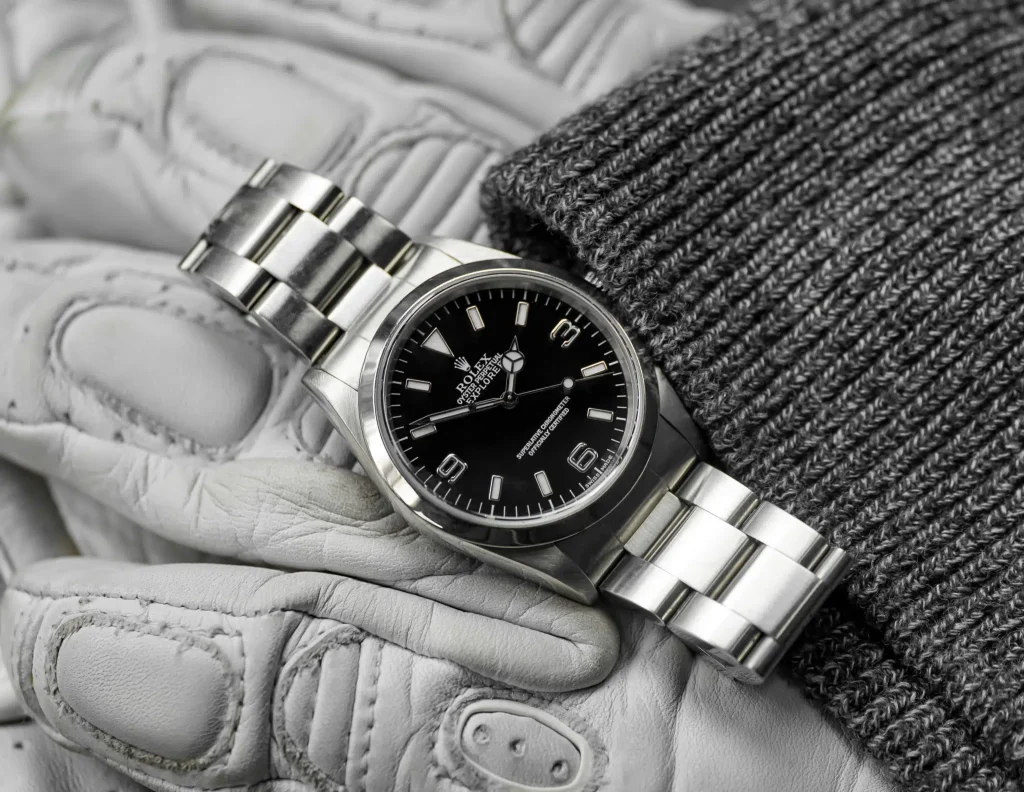
Rolex has been relatively restrained in its new product releases, and one of the new changes to the Explorer watch has garnered a lot of attention. Today, we’re going to take an in-depth look at the similarities and differences between the 36mm Explorer and the previous model, and analyze the significance behind this change.
The History of the Explorer
The story of the Rolex Explorer dates back to 1953 and is the result of Rolex’s experience in providing watches for numerous mountaineering expeditions. Of course, Sir Edmund Hillary’s legendary ascent of Mount Everest added to the story, as did the Omega Speedmaster’s association with NASA, making it an iconic story for the brand. Since then, the Explorer has served as the framework prototype for many sports watches, including the famous Submariner. Over the years, the Explorer has undergone a series of updates, with the 1016 model, produced between 1959 and 1989, considered by many vintage Rolex collectors to be the design model that defines the look and feel of the Explorer with its classic size and elegant proportions of 36 millimeters. However, in 2010, Rolex responded to the trend for larger diameters by updating the case size of the Explorer to 39 mm (Ref. 214270), a change that did not go over well with all enthusiasts at the time. Despite some minor updates in 2016 with the introduction of the Mark II version, not much has changed overall, but there are many today who have grown to love the Explorer in this size.
Comparison of the Parameters and Specifications of the Old and New Explorer Models
- In terms of case dimensions.
The 214270 II has a diameter of 39 millimeters, a lug spacing of 47 millimeters, and a thickness of 11 millimeters. This size combination wears well on most wrists, and its highly polished dial to bezel ratio design somewhat mitigates the visual presence of the 39mm diameter. The 124270 Explorer, on the other hand, returns to the classic 36mm diameter with a significantly shorter lug spacing of 43.1mm and a thickness of 11.5mm. Despite the slight increase in thickness, it feels like a proportionally smaller version of the 214270 on the hand. The new model is just the right size for those with thin wrists or those who prefer the mid-century style of watch sizing. - Strap.
The new Oyster bracelet narrows considerably from 19mm at the lugs to 14mm at the buckle (which itself is about 16mm wide), whereas the old 214270 narrowed from 20mm to 15mm at the buckle (with an 18mm buckle), and the effect of the new bracelet’s narrowing is even more pronounced on the smaller sizes. However, the new odd-numbered lug widths are slightly less versatile and do not feature the Glidelock strap fine-tuning system, but both the old and new models feature a short extension at the buckle. - Dial
The 36mm Explorer has opted for a lacquered dial treatment, which gives it a more glossy effect. In addition, the Explorer markers have been moved from the 6 o’clock position on the old 214270 to the 12 o’clock position on the dial, below the Oyster Perpetual. The layout of the dial remains classic, with Arabic numerals at 3, 6 and 9 o’clock, rectangular and triangular hour markers at the remaining positions, and the Mercedes-Benz hand. The new minute hand seems to be slightly shorter than the old one, falling just short of the bottom of the minute scale, but in terms of legibility, the two are similar and both are excellent. In terms of details, the new model has a small Rolex crown logo in the center of the “Swiss Made” (Swiss Made) inscription at six o’clock, which is also a common practice for Rolex’s recent new models. - Movement
The 124270 Explorer has been upgraded to the Caliber 3230, an undated version of the Caliber 3235 released in 2015, as found in the Sea Envoy (Ref. 126600) and the modern Rolex Logbook, among other models. the Caliber 3230 has the same modern technical features mentioned above, and has been certified and tuned by Rolex to exceed Swiss chronometer accuracy. It has been certified and calibrated by Rolex to exceed the Swiss chronometer standard of -2 to +2 seconds per day (Swiss chronometer -4 to +6 seconds). The frequency remains at 28,800 vibrations per hour (4 Hz) and the power reserve has been significantly increased to 70 hours, which is the most significant upgrade of the new Explorer apart from the reduced diameter.
Summary and Reflections
The biggest changes to the new Explorer model are undoubtedly the return to the classic 36mm diameter, the new movement, and the change in the craftsmanship of the dial. Over the past 15 years or so, Rolex has mostly moved towards larger sizes, as has been the case with models such as the new Submariner. The return of the 36mm size for the new Explorer is therefore quite surprising, and perhaps a sign that Rolex recognizes the importance of this watch to a specific consumer group and the classic value it represents.
Rolex has a complex relationship with its consumers, and unlike some of the sports models that have become “big” or hyped, the Explorer, like the original Explorer, as well as the Explorer II and Milgauss, conveys a different kind of classicism and understatement. In a way, the Explorer is the cornerstone of Rolex sports watchmaking, defining many of the classic elements of Rolex sports watches. The return to the 36mm size now fulfills the expectations of classic collectors and demonstrates the importance Rolex attaches to the watch’s traditional status. Of course, Rolex, as a commercial brand, must have had commercial considerations in mind for this change, suggesting that it saw market appeal and commercial value in the move.
For consumers choosing between the old and new models, the old 39mm Explorer is still an excellent watch if they have grown accustomed to it and love it. As for the new 36mm Explorer, apart from the odd lug width, which may be slightly inconvenient for strap matching, and a slight (but almost imperceptible) increase in thickness, the new model has been upgraded in various aspects while inheriting the classics, and I believe that it will be favored by watch enthusiasts who seek for a classic and pure style. In addition, it remains to be seen whether Rolex’s size adjustment will lead other brands to follow suit and reduce the size of some of their models in the next two to three years. This initiative may become an important wind vane for the change of size trend in the watch industry, influencing other brands’ product strategy decisions.
For more watch review articles check out >>>>>
For more watch buying guides check out >>>>>
For more watch buying guides check out >>>>>